May 19, 2026

Finance

Bitcoin’s price journey has been a rollercoaster, marked by periods of explosive growth, sharp declines, and consistent volatility. This analysis delves into the factors driving these fluctuations, examining both short-term price predictions and long-term trends. We’ll explore the relationship between Bitcoin and the broader cryptocurrency market, highlighting the influence of macroeconomic forces and regulatory changes.

Understanding Bitcoin’s price trend requires a nuanced perspective, considering the interplay of technical indicators, news events, and market sentiment. This analysis provides a comprehensive overview of the historical data, current dynamics, and potential future trajectory of Bitcoin’s value.

Bitcoin Price Movement Overview

Bitcoin’s price journey has been a rollercoaster, marked by periods of explosive growth, sharp declines, and significant volatility. Understanding these trends requires examining the historical data and the underlying factors influencing its price. This overview provides a comprehensive look at Bitcoin’s price movement, its key drivers, and its long-term trajectory.Bitcoin’s price is heavily influenced by market sentiment, regulatory developments, and technological advancements.

The cryptocurrency market, in general, is highly susceptible to speculative activity and news events, which often translate into dramatic price swings.

Historical Price Trend

Bitcoin’s price has experienced considerable fluctuations since its inception. Early adoption saw gradual price increases, followed by periods of substantial growth and subsequent corrections. The volatility has been a constant feature, making it a risky investment but also one with the potential for substantial gains.

  • Early Adoption (2009-2012): Bitcoin’s price started from near zero and slowly gained traction. This early phase saw a gradual increase, though the overall price remained relatively low.
  • Early Bull Run (2013-2014): A significant surge in Bitcoin’s price marked this period, reaching notable highs. The market experienced significant speculation and investor interest, but this bull run was followed by a sharp decline.
  • Consolidation and Volatility (2015-2020): Bitcoin’s price experienced a period of consolidation, with periods of both growth and decline. Market sentiment fluctuated significantly, often influenced by regulatory changes and technological developments.
  • Recent Bull Run (2020-Present): The recent years have seen another substantial bull run, with Bitcoin’s price reaching new all-time highs. Factors such as increased institutional adoption, positive market sentiment, and technological advancements contributed to this trend.

Influencing Factors

Numerous factors have influenced Bitcoin’s price fluctuations. These factors can be broadly categorized into market sentiment, regulatory developments, technological advancements, and macroeconomic conditions.

  • Market Sentiment: Investor confidence and public perception play a crucial role. Positive news or events often trigger price increases, while negative news or regulatory concerns can lead to price drops. Examples include social media trends and mainstream media coverage.
  • Regulatory Developments: Governments worldwide are developing regulations for cryptocurrencies. These regulations can either foster confidence or create uncertainty in the market, affecting the price. The SEC’s stance on Bitcoin ETFs, for instance, can influence the price.
  • Technological Advancements: Innovations in Bitcoin’s underlying technology and associated ecosystems can affect the price. Upgrades, new features, or the emergence of new applications can boost confidence and price. The introduction of Layer-2 solutions, for example, can improve the network’s scalability and increase its appeal.
  • Macroeconomic Conditions: Global economic events, such as interest rate changes, inflation, and geopolitical instability, can significantly affect Bitcoin’s price. The correlation between Bitcoin and the stock market, for example, shows a relationship influenced by macroeconomic trends.

Bitcoin Price Data

The following table presents Bitcoin’s price (USD) on specific dates, highlighting yearly highs and lows.

Date Bitcoin Price (USD)
2010-01-03 0.0001
2021-11-10 67,000
2022-06-18 20,000
2023-10-27 26,000

Long-Term Price Trajectory

Predicting Bitcoin’s long-term price trajectory is inherently complex. While Bitcoin has shown the potential for substantial growth, its volatility remains a significant consideration. Future price movements will likely depend on various factors, including regulatory clarity, technological advancements, and macroeconomic conditions.

Impact of Macroeconomic Factors

Macroeconomic conditions can significantly impact Bitcoin’s price. For example, during periods of economic uncertainty or high inflation, Bitcoin can be viewed as a hedge against traditional assets. However, a strong economic recovery could also lead to a reduction in Bitcoin’s appeal.

Relationship with Other Cryptocurrencies

Bitcoin’s price often correlates with the prices of other cryptocurrencies. When Bitcoin experiences a surge, other cryptocurrencies often see similar increases. Conversely, declines in Bitcoin can trigger declines in other cryptocurrencies. The relationship between these assets is often complex and interconnected.

Short-Term Price Prediction Factors

Short-term Bitcoin price predictions rely heavily on a combination of technical indicators, news events, and social sentiment. Analyzing these factors allows traders to identify potential price movements and make informed decisions. Understanding the interplay between these elements is crucial for successful short-term trading strategies.

Technical Indicators Affecting Bitcoin Price

Technical indicators provide insights into Bitcoin’s price movements based on past trading data. These indicators, such as moving averages, relative strength index (RSI), and volume, offer a framework for assessing potential trends and identifying support and resistance levels. For instance, a rising moving average often suggests an uptrend, while a sharp decline in volume might signal a weakening trend.

Careful consideration of multiple indicators is key to forming a comprehensive picture of the market’s direction.

News Events and Social Media Sentiment in Price Swings

News events, including regulatory announcements and significant developments in the cryptocurrency space, can significantly impact Bitcoin’s short-term price. Social media sentiment, reflected in discussions and opinions about Bitcoin, also plays a critical role. Positive news or a surge in positive sentiment can trigger price increases, while negative events or opinions can lead to downward pressure. The combined influence of news and social media often creates volatile price movements that traders must navigate.

Recent Significant Events Impacting Bitcoin’s Price

Several recent events have impacted Bitcoin’s price. These include regulatory discussions in key jurisdictions, significant advancements in blockchain technology, and major market events such as the collapse of certain crypto firms. These events can influence the market’s perception of Bitcoin’s value and lead to price fluctuations.

Regulatory Changes and Their Influence on Short-Term Price Action

Regulatory changes, such as new laws or stricter enforcement, can dramatically affect Bitcoin’s short-term price. These changes can either increase or decrease investor confidence, leading to either a positive or negative price reaction. The uncertainty surrounding regulations often contributes to volatility in the market.

Comparison of Trading Strategies During Short-Term Price Movements

Various trading strategies are employed by traders during short-term price movements. These strategies include day trading, swing trading, and scalping, each with its own set of risks and rewards. Day traders aim to profit from short-term price fluctuations within a single trading day. Swing traders capitalize on medium-term price movements lasting several days or weeks. Scalpers, on the other hand, exploit small price changes, aiming for quick profits.

Short-Term Price Predictions Based on Technical Analysis

The following table presents a simplified example of short-term price predictions based on technical analysis. These predictions are illustrative and should not be considered financial advice. Note that various technical indicators and their thresholds would need to be considered in a real-world scenario.

Date Technical Indicator Prediction Rationale
2024-10-26 Moving Average Crossover Slight Upward Trend Short-term bullish signal.
2024-10-27 RSI Oversold Potential Reversal RSI suggests potential price increase.
2024-10-28 Volume Decrease Possible Consolidation Decreased volume may indicate a pause in the trend.

Long-Term Price Trend Analysis

Bitcoin’s long-term price trajectory is a complex interplay of technological advancements, adoption rates, and market sentiment. While predicting the precise future price is impossible, analyzing historical patterns and underlying drivers provides a framework for understanding potential long-term trends. This analysis considers crucial factors shaping Bitcoin’s future, from technological innovations to institutional involvement and potential obstacles.Understanding Bitcoin’s long-term price movement necessitates a nuanced approach that goes beyond short-term fluctuations.

Historical data, combined with an evaluation of underlying forces, paints a more complete picture of the cryptocurrency’s potential future.

Technological Advancements Influencing Long-Term Growth

Bitcoin’s underlying blockchain technology, while foundational, is not static. Continuous development and innovation in areas like scalability, security, and transaction speeds can significantly impact its long-term viability and user adoption. Improvements in transaction throughput, for instance, could make Bitcoin more competitive with traditional payment systems, potentially driving price appreciation.

Adoption and Integration into Mainstream Finance

The integration of Bitcoin into mainstream financial systems is a key driver of its long-term price. Increased acceptance by businesses, financial institutions, and everyday consumers translates to greater utility and demand. The growing presence of Bitcoin in institutional portfolios and investment strategies demonstrates this trend. Examples of institutional adoption include certain investment firms including Bitcoin in their portfolios, signaling a growing acceptance of the asset class.

Factors Potentially Hindering Long-Term Growth

Several factors could impede Bitcoin’s long-term price appreciation. Regulatory uncertainty remains a significant concern. Government regulations, both positive and negative, can dramatically impact market sentiment and trading activity. For instance, regulatory restrictions or outright bans in specific jurisdictions can limit the asset’s accessibility, thereby potentially dampening demand. Furthermore, security breaches and vulnerabilities in the Bitcoin network can erode investor confidence and affect the price.

This can manifest as a loss of trust, similar to the impact of security breaches on other financial assets.

Impact of Institutional Investment

Institutional investment plays a critical role in influencing Bitcoin’s long-term price trend. The entrance of large institutional players into the market signifies a move towards greater legitimacy and acceptance. This can lead to increased liquidity and trading volume, positively impacting the price. Large institutional investors often bring substantial capital to the table, which can significantly influence market dynamics.

For example, the inclusion of Bitcoin in the portfolios of prominent investment funds can signal a shift in market sentiment, potentially leading to price appreciation.

Consequences of Technological Advancements in the Cryptocurrency Space

The cryptocurrency landscape is dynamic, and advancements in other cryptocurrencies or blockchain technologies could impact Bitcoin’s future. Competitors may emerge, offering alternative solutions that capture market share and demand. These new entrants might offer superior features, like faster transaction speeds or improved security. The emergence of competing technologies can create a challenge for Bitcoin’s dominance, which could potentially impact its long-term value.

Consider the emergence of Ethereum, which has influenced the cryptocurrency landscape and attracted significant attention.

Cryptocurrency Market Context

The cryptocurrency market is highly interconnected, and Bitcoin’s price often reflects the overall sentiment and performance of other cryptocurrencies. Factors like regulatory developments, technological advancements, and overall market confidence can significantly influence the entire ecosystem. Understanding this interconnectedness is crucial for assessing Bitcoin’s potential future movements.The performance of other cryptocurrencies significantly impacts Bitcoin’s price. When altcoins (alternative cryptocurrencies) experience a surge in popularity or adoption, it can sometimes lead to increased investment in Bitcoin as well, potentially boosting its price.

Conversely, a downturn in the altcoin market can negatively impact investor confidence in the entire cryptocurrency space, potentially leading to a decrease in Bitcoin’s value. This correlation isn’t always direct, but it often exists.

Major Crypto Events and Market Impact

Major events in the cryptocurrency space, such as significant regulatory announcements, large-scale hacks, or the launch of new blockchain technologies, can trigger substantial price fluctuations across the board. For instance, regulatory changes in key jurisdictions can impact investor sentiment and trading activity, affecting not just Bitcoin but the entire market. The 2017 ICO boom, followed by the subsequent downturn, is a prime example of a market-wide event influencing prices.

Comparison of Cryptocurrency Performance

Bitcoin’s performance is often compared to other significant cryptocurrencies, like Ethereum, XRP, and Litecoin. These comparisons can highlight similarities and differences in price movements and market trends. Sometimes, similar price trends across different cryptocurrencies can indicate broader market trends, while diverging trends can point to specific issues affecting one particular cryptocurrency.

Factors Influencing Cryptocurrency Prices

Several factors influence the price movements of various cryptocurrencies. These include investor sentiment, media coverage, technological advancements, regulatory developments, and market speculation. For example, positive news regarding a specific cryptocurrency or a technological advancement in its underlying blockchain can lead to increased investor interest and a price increase. Conversely, negative news or regulatory concerns can cause a decline.

Market Capitalization and Trading Volume Comparison

The table below provides a snapshot of the market capitalization and trading volume for Bitcoin and other significant cryptocurrencies, as of a specific date. Comparing these metrics provides a quantitative understanding of the relative importance and liquidity of each cryptocurrency in the market. This data is dynamic and changes frequently.

Cryptocurrency Market Capitalization (USD) 24-Hour Trading Volume (USD)
Bitcoin [Value] [Value]
Ethereum [Value] [Value]
XRP [Value] [Value]
Litecoin [Value] [Value]
[Other significant cryptocurrency] [Value] [Value]

Factors Influencing Price Volatility

Bitcoin’s price exhibits significant volatility, a characteristic that often surprises newcomers to the cryptocurrency market. Understanding the underlying forces driving these fluctuations is crucial for both investors and traders. This section delves into the key factors that contribute to Bitcoin’s price swings, examining the impact of speculation, regulatory uncertainty, media coverage, and algorithmic trading.

Speculation and Market Sentiment

Market sentiment plays a pivotal role in Bitcoin’s price movements. Positive sentiment, fueled by favorable news or perceived future growth, can drive up the price. Conversely, negative sentiment, triggered by concerns about regulatory changes or market downturns, can lead to significant price drops. The psychology of the market, often fueled by speculation and herd behavior, can significantly amplify or dampen price fluctuations.

Examples of this include the 2017 Bitcoin bull run, largely driven by investor optimism, and the subsequent market correction that followed.

Regulatory Uncertainty

Government regulations significantly impact the cryptocurrency market, including Bitcoin. Ambiguity surrounding regulatory frameworks, such as tax laws and licensing requirements, can create uncertainty and apprehension among investors. This uncertainty often leads to increased volatility, as investors react to perceived threats or opportunities. For instance, differing interpretations of regulations across jurisdictions can result in price fluctuations as investors adjust their strategies in response to the evolving legal landscape.

News and Media Coverage

News and media coverage can significantly influence investor sentiment and, consequently, Bitcoin’s price. Positive news stories, such as successful adoption by major companies, often boost investor confidence and lead to price increases. Conversely, negative news, including security breaches or regulatory concerns, can trigger substantial price drops. The speed and intensity of media coverage can also amplify these price movements, with widespread reporting often creating a ripple effect in the market.

Algorithmic Trading

Algorithmic trading strategies play a significant role in Bitcoin’s price volatility. High-frequency trading, for example, employs sophisticated algorithms to execute trades at extremely fast speeds, often reacting to small price changes. This can create a self-reinforcing feedback loop, where algorithms trigger price fluctuations that, in turn, trigger further algorithm-driven trades. These automated trading strategies can influence price volatility, sometimes causing sudden and substantial price swings.

Correlation Between Factors and Price Fluctuations

Factor Impact on Bitcoin Price Example
Speculation and Market Sentiment Positive sentiment leads to price increases; negative sentiment leads to price drops. Positive news about Bitcoin adoption by a major corporation leads to price increase.
Regulatory Uncertainty Ambiguity and concerns about regulations lead to price volatility. Unclear tax laws for cryptocurrency trading can lead to price drop due to investor uncertainty.
News and Media Coverage Positive news boosts price; negative news triggers price drops. Reports of a major security breach in a Bitcoin exchange lead to price decrease.
Algorithmic Trading High-frequency trading algorithms can create sudden and substantial price swings. Algorithms react to small price changes, potentially triggering a large sell-off or buy-up.

Illustrative Historical Price Charts

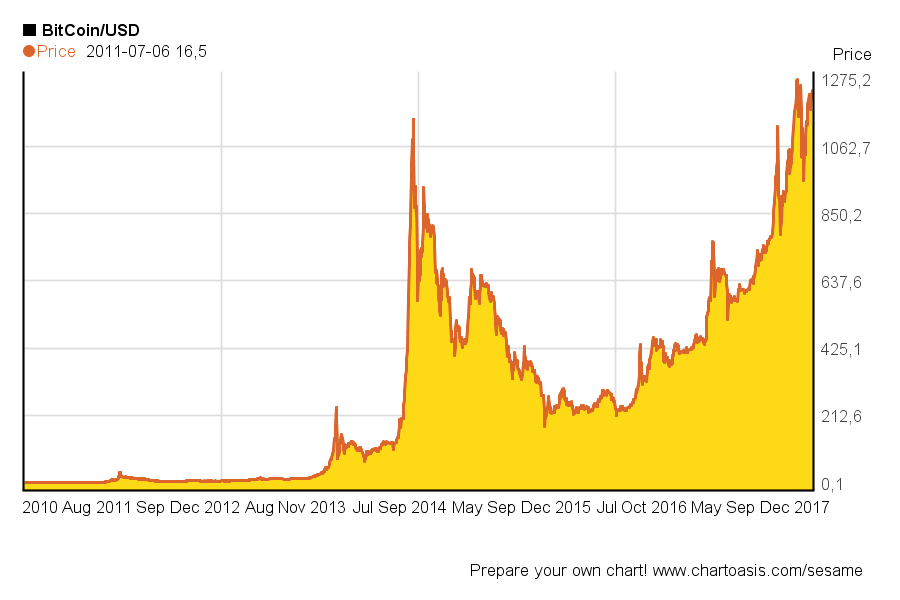
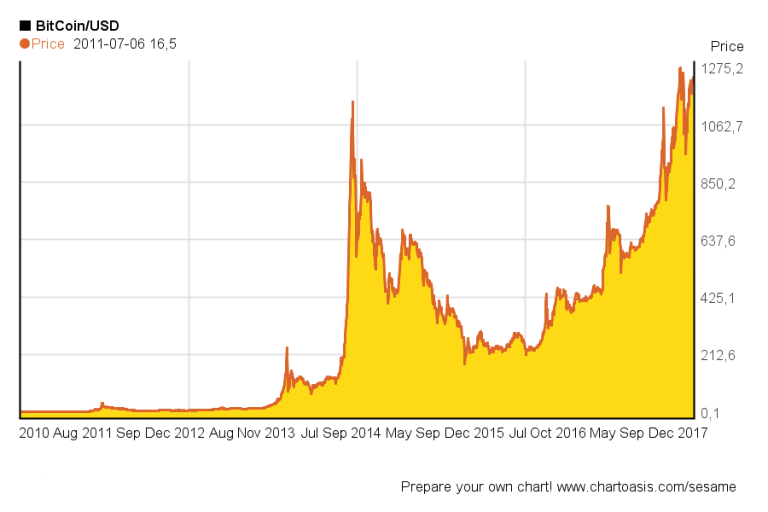
bitcoin-historical-chart - TechStartups

A visual representation of Bitcoin’s price journey provides valuable insights into its market dynamics. Historical charts, spanning from 2010 to the present, showcase the dramatic fluctuations and long-term trends that have shaped the cryptocurrency. These charts reveal the interplay of factors, from technological advancements to market sentiment, that have driven Bitcoin’s price.Examining these charts allows us to identify critical turning points, understand the underlying forces impacting the market, and potentially recognize patterns that might suggest future price movements.

Analyzing historical data, while not a perfect predictor, can illuminate potential market reactions to similar events or conditions.

Bitcoin Price Chart (2010-Present)

The Bitcoin price chart, spanning from 2010 to the present, exhibits a pattern of significant volatility and several distinct phases. The initial years displayed extremely low prices and slow growth, reflecting the nascent stage of the cryptocurrency market. Subsequent years saw periods of explosive growth, followed by substantial corrections, illustrating the high-risk nature of this investment.

Key Price Movements and Trends

The chart reveals distinct periods of price appreciation and decline. Early periods show slow, incremental growth. A notable period of rapid increase occurred around the late 2017 and early 2018 period. More recently, the chart displays more sustained periods of consolidation and sideways movement, reflecting a maturation of the market. The graph also illustrates the prevalence of significant price fluctuations that are characteristic of the cryptocurrency market.

Significant Events and Price Changes

Major events often correlate with noticeable price changes. For instance, the emergence of major Bitcoin exchanges, advancements in blockchain technology, regulatory developments, and periods of heightened investor interest often coincided with substantial price increases. Conversely, periods of market uncertainty, regulatory concerns, or negative news about Bitcoin can lead to significant price drops. These correlations underscore the influence of external factors on the Bitcoin market.

Support and Resistance Levels

Support and resistance levels, visualized on the chart, are crucial in understanding the market’s psychology. These levels represent price points where the demand and supply forces are balanced. The chart will display historical support levels that have been tested and broken, along with resistance levels that have been tested but not yet broken. These points help predict future price movements and market sentiment.

Market Sentiment and External Factors

The overall market sentiment, as reflected in the price chart, is one of high volatility and uncertainty. The chart illustrates the influence of various external factors, including technological advancements, regulatory actions, and media coverage. For example, periods of positive news about Bitcoin and advancements in related technologies are typically followed by upward price trends. Conversely, periods of regulatory uncertainty or negative press frequently coincide with downward trends.

This illustrates how the Bitcoin market reacts to external forces.

Closure

In conclusion, Bitcoin’s price trend is a complex interplay of various factors, from technological advancements to macroeconomic shifts. While short-term predictions are inherently uncertain, a long-term perspective reveals a fascinating dynamic. This analysis offers a framework for understanding the factors influencing Bitcoin’s price and its place within the broader cryptocurrency market. The future remains uncertain, but this exploration provides valuable insights for informed decision-making.

Q&A

What is the impact of institutional investment on Bitcoin’s long-term price?

Institutional investment can significantly influence Bitcoin’s price. Increased participation from large financial institutions can lead to greater demand and price appreciation, but it can also introduce volatility if these investments are withdrawn or adjusted.

How do regulatory changes affect Bitcoin’s short-term price?

Regulatory uncertainty often creates short-term price fluctuations in Bitcoin. Changes in regulations, or even the perceived threat of change, can cause traders to react, potentially driving up or down the price.

What is the relationship between Bitcoin’s price and the overall cryptocurrency market?

Bitcoin’s price often mirrors the overall cryptocurrency market’s performance. Significant events in the broader crypto space, such as major launches or regulatory announcements, can influence Bitcoin’s price direction.

How do historical price charts help us understand Bitcoin’s price trend?

Historical price charts offer valuable insights into Bitcoin’s past price movements. They reveal patterns, trends, and the impact of external factors on the price, enabling better understanding of current and future price action.

Navigating the world of cryptocurrency can feel daunting, especially when considering buying Bitcoin in the UK. This guide dives deep into the various apps available, offering a practical overview of the process and essential safety precautions.

From popular platforms to security considerations, and payment methods, this resource empowers you with the knowledge needed to make informed decisions about purchasing Bitcoin in the UK.

Introduction to Bitcoin Buying Apps in the UK

The UK cryptocurrency market is experiencing significant growth, attracting both seasoned investors and newcomers. Bitcoin, as the pioneering cryptocurrency, has become increasingly popular, driven by factors like its decentralized nature and potential for high returns. This rise in popularity has spurred the development of numerous Bitcoin buying apps, providing diverse options for UK users.The accessibility of Bitcoin has broadened significantly with the emergence of user-friendly platforms.

These apps facilitate seamless transactions, making it easier for individuals to engage in the cryptocurrency market, whether for investment or everyday transactions.

Overview of the UK Cryptocurrency Market

The UK cryptocurrency market is a dynamic sector, characterized by a growing number of exchanges and investors. Regulation plays a crucial role, with the Financial Conduct Authority (FCA) overseeing certain aspects of the market. This regulatory framework aims to protect investors and maintain market integrity. The UK’s position as a global financial centre contributes to its attractiveness for cryptocurrency businesses.

A key feature is the diverse range of investment options available, catering to different risk tolerances and investment strategies.

Popular Bitcoin Buying Methods in the UK

People in the UK have several ways to acquire Bitcoin. Direct purchases from exchanges are common, allowing users to buy Bitcoin with fiat currency, often through debit or credit cards. Many platforms also offer peer-to-peer (P2P) trading, enabling users to directly exchange Bitcoin with other individuals. This method provides an alternative to traditional exchanges and often offers competitive rates.

Furthermore, some providers allow the use of bank transfers or other digital payment methods.

Comparison of Bitcoin Buying Platforms in the UK

Platform Features Pros Cons
Coinbase Wide range of cryptocurrencies, user-friendly interface, robust security measures, international coverage. Ease of use, broad selection of cryptocurrencies, secure platform. Can have slightly higher transaction fees compared to some smaller platforms, may not offer the widest range of payment methods.
Kraken High trading volume, advanced trading tools, suitable for experienced investors, international reach. Excellent for high-volume trading, extensive features, good security. Steeper learning curve compared to some platforms, might not be ideal for beginners.
Revolut Integration with existing banking infrastructure, convenient mobile app, wide acceptance of debit/credit cards, useful for international transactions. Ease of integration with existing banking systems, convenient mobile access, often lower fees for debit/credit card purchases. May have limitations on the amount of Bitcoin that can be purchased per transaction, fewer advanced features compared to dedicated cryptocurrency exchanges.
Binance Huge trading volume, global reach, wide range of cryptocurrencies, competitive fees. Very high trading volume, competitive fees, wide range of cryptocurrencies. Potentially higher risk profile, might be overwhelming for new users, regulatory considerations in the UK need to be noted.

Popular Bitcoin Buying Apps in the UK

Navigating the UK’s cryptocurrency landscape can feel overwhelming, especially when choosing a platform to buy Bitcoin. Numerous apps cater to this need, but understanding their strengths and weaknesses is crucial for a smooth and secure experience. This section explores some of the most popular options, outlining their features and comparing their performance to help you make an informed decision.

Top Bitcoin Buying Apps in the UK

Several platforms facilitate Bitcoin purchases in the UK. This analysis focuses on the top contenders, providing insights into their respective strengths and weaknesses.

  • Coinbase: A globally recognized platform, Coinbase offers a user-friendly interface and a wide range of cryptocurrencies beyond Bitcoin. Its robust security measures, including two-factor authentication and cold storage, help maintain user funds. While the platform has a high volume of transactions, the fees can sometimes be higher compared to other options. Coinbase provides excellent educational resources, making it a good choice for newcomers.

  • Kraken: Known for its advanced trading features, Kraken caters to more experienced users seeking sophisticated options. Its security infrastructure is well-regarded, with multiple layers of protection. Kraken typically has lower fees than Coinbase, especially for larger transactions. However, the platform might be less user-friendly for beginners compared to Coinbase, demanding a greater understanding of cryptocurrency markets.

  • Revolut: While primarily a financial services app, Revolut offers Bitcoin buying capabilities. Its integration with existing banking services makes it convenient for users already familiar with the platform. Fees are generally competitive, and the app’s broad range of features can be a significant advantage for users looking for a versatile financial tool. However, its focus on a broader range of financial services might lead to slightly less emphasis on Bitcoin-specific features and support.

  • Binance: A global exchange, Binance offers a wide array of cryptocurrencies and trading options. While Binance UK does not currently offer direct Bitcoin purchases, the presence of this global exchange in the UK market should not be ignored. This platform may be more suitable for experienced traders looking for flexibility and potentially lower fees compared to Coinbase or Kraken.

    Users should be aware of the global nature of Binance and potential regulatory implications in the UK.

App Comparison

Understanding the key differences between these platforms is essential for making an informed choice.

App Security Features Transaction Fees User Reviews
Coinbase Two-factor authentication, cold storage, robust security protocols Can be higher than some competitors Generally positive, high user satisfaction regarding ease of use and security
Kraken Multiple security layers, advanced security measures Generally lower than Coinbase, especially for larger transactions Positive reviews, but might be considered more complex for beginners
Revolut Security measures integrated with broader financial services platform Competitive fees Positive reviews, appreciated for ease of use and integration with existing banking systems
Binance Global exchange security measures Potential for lower fees, but may vary depending on specific transactions and market conditions Widely used, reviews can vary depending on experience level and specific use cases

Security and Safety Considerations When Buying Bitcoin

Buying Bitcoin in the UK, like any financial transaction, comes with inherent security risks. Understanding these risks and implementing appropriate safety measures is crucial to protecting your investment. This section details the potential security threats and provides practical tips for mitigating them.Bitcoin, while offering a degree of decentralization, remains vulnerable to scams and fraudulent activities. Reputable platforms and diligent buyer practices are essential to safeguarding your cryptocurrency holdings.

Security Risks Associated with Buying Bitcoin

Bitcoin transactions, though often portrayed as anonymous, are not entirely impervious to scrutiny. Security risks encompass a wide range of threats, including phishing scams, malware attacks, and platform vulnerabilities. Criminals often exploit the complexities of the cryptocurrency market and the lack of stringent regulations in some regions to target unsuspecting buyers.

Common Scams and Fraudulent Activities

Numerous scams target Bitcoin buyers. These include fake exchanges, phishing emails claiming to be legitimate platforms, and fraudulent investment schemes promising high returns. These scams frequently use social engineering tactics to trick individuals into revealing sensitive information or transferring their funds to fraudulent accounts. Often, victims are targeted through social media or email, posing as legitimate Bitcoin providers.

A key example is a fake exchange that appears legitimate, but redirects funds to a criminal’s wallet.

Importance of Choosing Reputable Platforms

Selecting a reputable Bitcoin buying platform is paramount. Thorough research into the platform’s history, user reviews, and security measures is vital. Look for platforms with strong security protocols, clear terms of service, and customer support readily available. A reliable platform should have a robust track record and be transparent about its security practices.

Tips for Staying Safe When Buying Bitcoin

Maintaining vigilance and following these safety measures can significantly reduce the risk of encountering fraudulent activities.

  • Thoroughly research any platform before using it. Look for reviews, security certifications, and the presence of regulatory compliance.
  • Avoid clicking on suspicious links or downloading attachments from unknown sources. Phishing emails and malicious software can compromise your account.
  • Use strong, unique passwords for all your accounts, and enable two-factor authentication whenever possible.
  • Keep your software updated to patch any potential vulnerabilities.
  • Be cautious of offers promising unrealistic returns on your Bitcoin investments.
  • Never share your private keys or passwords with anyone.
  • Monitor your accounts regularly for any suspicious activity.

Importance of Using Strong Passwords and Two-Factor Authentication

Strong passwords and two-factor authentication (2FA) are fundamental security measures. Strong passwords are complex combinations of letters, numbers, and symbols, avoiding easily guessable words or personal information. 2FA adds an extra layer of security by requiring a second verification method, like a code from your phone, in addition to your password. These measures significantly reduce the risk of unauthorized access to your accounts.

Criminals often exploit weak passwords to gain unauthorized access to accounts and wallets. Using strong passwords and 2FA is a proactive step against such threats.

Methods for Buying Bitcoin in the UK

Purchasing Bitcoin in the UK offers a variety of options, each with its own set of advantages and disadvantages. Understanding these methods is crucial for making informed decisions and ensuring a secure transaction. Different payment methods cater to various needs and preferences, ranging from traditional bank transfers to cryptocurrency exchanges.

Payment Methods Accepted by Bitcoin Buying Apps

Several payment methods are commonly used by Bitcoin buying apps in the UK. This section Artikels the most prevalent options.

  • Bank Transfer: A widely accepted method, bank transfers allow users to directly transfer funds from their bank accounts to the Bitcoin buying app. This is often a straightforward process, although it might involve a processing time for the transaction to complete.
  • Debit/Credit Cards: Debit and credit cards provide a convenient way to purchase Bitcoin instantly. This method is user-friendly, but transaction fees and potential security risks should be considered.
  • PayPal: PayPal is a popular digital payment platform. This method is quick and allows users to leverage their existing PayPal accounts. However, fees and transaction limits might apply.
  • Apple Pay/Google Pay: For mobile-first users, Apple Pay and Google Pay are convenient options. These methods offer a secure and quick way to buy Bitcoin using mobile devices. Transaction times and potential limitations specific to these platforms should be considered.
  • Other Cryptocurrency Exchanges: Some Bitcoin buying apps allow for purchasing Bitcoin using other cryptocurrencies. This can be advantageous if the user already holds other cryptocurrencies. This approach might involve conversion fees or other platform-specific charges.

Advantages and Disadvantages of Each Payment Method

A careful assessment of the pros and cons of each method is essential for selecting the most suitable option.

Payment Method Advantages Disadvantages
Bank Transfer Generally secure, low fees (depending on the bank). Slower transaction times, potentially higher processing fees from the app.
Debit/Credit Cards Fast transaction times, convenient for immediate purchases. Higher transaction fees, potential security risks if not handled properly.
PayPal Convenience of existing PayPal account, relatively quick transactions. Fees and potential transaction limits, may not be available in all regions.
Apple Pay/Google Pay Mobile-friendly, secure payment option. Transaction times and limitations depending on the app’s integration.
Other Cryptocurrency Exchanges Potentially lower fees compared to traditional methods, access to diverse cryptocurrencies. Requires navigating multiple platforms, potential exchange rate fluctuations.

Step-by-Step Guide for Buying Bitcoin Using Bank Transfer

This example provides a general guideline for buying Bitcoin using bank transfer.

  1. Account Creation: Register an account on the chosen Bitcoin buying app.
  2. Verification: Verify your identity according to the app’s requirements. This usually involves providing personal information and documents.
  3. Funding Your Account: Initiate a bank transfer from your bank account to the designated account within the app.
  4. Bitcoin Purchase: Once the transfer is processed, select the desired amount of Bitcoin to purchase and complete the transaction.
  5. Confirmation: Confirm the transaction details and ensure the transaction is successfully executed.

Popular Payment Gateways

Numerous payment gateways are integrated into Bitcoin buying apps.

  • Revolut: A popular payment platform allowing users to buy Bitcoin using their Revolut account. Revolut offers features that make it attractive for users.
  • Wise: Another popular payment platform allowing users to buy Bitcoin using their Wise account. Wise has advantages, but should be researched based on the user’s requirements.
  • Other major bank transfer methods: Most reputable Bitcoin buying apps support major bank transfer methods in the UK. Verify the specific options available on the platform of choice.

Deposit and Withdrawal Processes

The deposit and withdrawal processes vary depending on the chosen payment method and Bitcoin buying app.

  • Deposit: The deposit process usually involves initiating a transfer from the chosen payment method to the app’s designated account. Transaction times and limitations are specific to the chosen method.
  • Withdrawal: Withdrawal involves initiating a transfer from the app’s account to the designated payment method. There are often limits and processing times that differ based on the method and app.

The Process of Buying Bitcoin

Buying Bitcoin through a UK-based app is typically straightforward, although specific steps may vary slightly depending on the platform. Understanding the process, from account setup to transaction completion, is crucial for a smooth and secure experience. This section Artikels the common steps involved.The procedure involves several key steps, including account verification, funding your account, selecting the desired amount of Bitcoin, and finalizing the purchase.

This structured approach minimizes the risk of errors and ensures a secure transaction.

Account Verification

Verification procedures are essential for security and compliance reasons. Completing these checks ensures the app adheres to regulatory guidelines and safeguards user funds. This process often involves providing personal identification documents, such as a government-issued photo ID and proof of address.

Funding Your Account

Once your account is verified, you need to fund it with a supported payment method. Common options include bank transfers, debit/credit cards, or other digital wallets. Choosing a suitable funding method and confirming the details are critical to initiate the purchase.

Selecting Bitcoin and Completing the Purchase

After funding, you choose the amount of Bitcoin you wish to buy. The app displays the current market price, enabling informed decisions. Confirming the transaction details is vital to prevent errors. A confirmation screen, typically with an order summary and a clear indication of the total cost and the amount of Bitcoin to be purchased, is presented.

Transaction Confirmation

The final step involves confirming the purchase. This typically involves reviewing the transaction details and approving the order. A confirmation message is displayed upon successful completion. The app usually provides a unique transaction ID for tracking the progress of the purchase.

Visual Representation of the Process

Step Action Description
Step 1 Account Verification Provide required personal information (e.g., ID, address) to verify your identity.
Step 2 Fund Account Deposit funds into your account using a supported payment method (e.g., bank transfer, debit card).
Step 3 Specify Bitcoin Amount Select the amount of Bitcoin you want to purchase, considering the current market price.
Step 4 Review Transaction Carefully review the transaction details, including the total cost and the Bitcoin amount.
Step 5 Confirm Purchase Approve the transaction to complete the Bitcoin purchase.

Buying Bitcoin

Bitcoin, a digital or cryptocurrency, operates independently of traditional financial systems. Its value is determined by market forces, influenced by factors such as supply and demand, news events, and investor sentiment. Unlike fiat currencies like the British Pound, Bitcoin’s value is not backed by a government or central bank. This decentralized nature contributes to both its appeal and its volatility.Understanding Bitcoin’s value and how it’s established is crucial for anyone considering purchasing it.

Its price fluctuations are often significant, demanding a cautious approach to investment.

Understanding Bitcoin’s Value

Bitcoin’s value is primarily determined by market forces. Speculation and investment play a considerable role, alongside factors such as adoption rates, regulatory developments, and technological advancements. The scarcity of Bitcoin, limited to 21 million coins, is a theoretical driver of value, although it doesn’t always translate into consistent price appreciation.

Bitcoin’s History and Evolution

Bitcoin emerged as a decentralized digital currency in 2009, conceived by an enigmatic figure or group known as Satoshi Nakamoto. Its early years were marked by slow adoption, but its potential was gradually recognized by investors and businesses. The increasing acceptance of Bitcoin as a payment method and its use in various financial transactions have significantly influenced its development and recognition.The increasing accessibility of Bitcoin exchanges and trading platforms has broadened its reach and user base, contributing to its evolution as a legitimate investment option.

Comparing Bitcoin to Other Investments

Bitcoin’s investment characteristics differ significantly from traditional assets like stocks or bonds. Bitcoin’s price volatility is considerably higher, and its correlation with other markets is often weak. The decentralized nature of Bitcoin means it’s not directly affected by the same economic factors influencing traditional investments. Therefore, it can be viewed as a separate investment class with its unique risk-reward profile.For instance, a significant market downturn in traditional assets may not necessarily impact Bitcoin’s value.

Conversely, specific events impacting the Bitcoin market can influence its price without necessarily impacting other investments.

Potential Benefits and Risks of Bitcoin Investment

Potential benefits of Bitcoin investment include the possibility of substantial returns, particularly in the long term. Its decentralized nature may offer a hedge against potential financial crises in traditional systems. However, the high volatility associated with Bitcoin necessitates careful risk assessment. Rapid price swings can lead to significant losses if not managed prudently.The speculative nature of Bitcoin is a significant risk factor.

Factors such as regulatory changes and technological breakthroughs can influence its price in unpredictable ways. Thorough research and diversification are crucial for mitigating potential risks.

The Regulatory Landscape for Cryptocurrencies in the UK

The UK government has adopted a relatively supportive approach towards cryptocurrencies, but this landscape is continuously evolving. Regulations aim to balance the benefits of innovation with consumer protection. The Financial Conduct Authority (FCA) plays a key role in overseeing and regulating cryptocurrency activities within the UK market. Understanding these regulatory frameworks is crucial for investors to operate within legal parameters.

It’s essential to stay informed about evolving legislation and guidance from regulatory bodies.

Buying Bitcoin in the UK: Additional Information

Bitcoin has gained popularity as a digital asset, but navigating its purchase in the UK requires understanding the underlying mechanisms. This section provides crucial supplementary information, from the role of exchanges to tax implications and the importance of various Bitcoin wallets. This knowledge empowers informed decision-making for UK-based Bitcoin buyers.

The Role of Exchanges in Bitcoin Transactions

Exchanges act as intermediaries in Bitcoin transactions, facilitating the buying and selling of the cryptocurrency. They provide a platform where buyers and sellers meet, enabling the exchange of Bitcoin for fiat currencies like the British Pound. Security measures, such as two-factor authentication and robust encryption, are essential components of a reputable exchange. The choice of exchange is a critical factor influencing the transaction experience.

Tax Implications of Bitcoin Transactions in the UK

Bitcoin transactions in the UK are subject to tax regulations. Profits realized from Bitcoin trading are generally treated as capital gains. The specific tax rate depends on the individual’s income bracket. It’s crucial to consult with a tax advisor to understand the precise tax obligations associated with Bitcoin transactions. The UK government provides resources and guidance for understanding and complying with tax regulations regarding cryptocurrencies.

Different Types of Bitcoin Wallets and Their Importance

Various Bitcoin wallet types cater to different needs and security levels. Hardware wallets offer enhanced security by storing private keys offline. Software wallets, such as those integrated into exchanges, provide accessibility but may involve security risks if not properly secured. Mobile wallets offer convenient access but often have limitations regarding security and privacy. Choosing the appropriate wallet type is vital for safeguarding Bitcoin holdings.

Understanding Market Fluctuations

Bitcoin’s price is influenced by market forces and various factors, including investor sentiment and news events. Understanding these fluctuations is essential for effective trading strategies. Past performance is not indicative of future results, and market analysis is crucial for evaluating potential risks and opportunities. For example, the 2017 Bitcoin bull run and the subsequent downturn demonstrate the volatile nature of the market.

Trading Strategies Related to Bitcoin

Several trading strategies exist for Bitcoin, each with its own risk profile. Day trading involves short-term buy and sell decisions, often requiring a high level of market awareness. Swing trading focuses on medium-term price movements. Long-term holding strategies aim to capitalize on long-term price appreciation, requiring patience and a robust risk tolerance. These strategies, along with others, should be approached with a clear understanding of the market dynamics.

Conclusion

App Store - Apple (香港)

In conclusion, buying Bitcoin in the UK through dedicated apps presents a straightforward process, though inherent risks and regulatory considerations should not be overlooked. Choosing reputable platforms, understanding transaction fees, and prioritizing security measures are crucial for a smooth and secure experience.

Helpful Answers

What are the typical transaction fees associated with using these apps?

Transaction fees vary significantly between platforms. Factors like the amount being transferred and the chosen payment method often influence the fee structure. Always check the app’s specific fee schedule before making a purchase.

What are some common scams to watch out for when buying Bitcoin?

Be wary of unsolicited emails or messages promising high returns on your Bitcoin investments. Never share your private keys or login credentials with anyone. Always verify the legitimacy of the platform before making any transactions.

Are there any tax implications for buying and selling Bitcoin in the UK?

Yes, cryptocurrency transactions may be subject to UK tax regulations. Consult with a financial advisor to understand your specific tax obligations regarding Bitcoin transactions.

What are the different types of Bitcoin wallets available?

Bitcoin wallets come in various forms, from software wallets (desktop and mobile) to hardware wallets. Each offers varying levels of security and convenience. Consider your needs and risk tolerance when selecting a wallet type.